38 dv on food labels
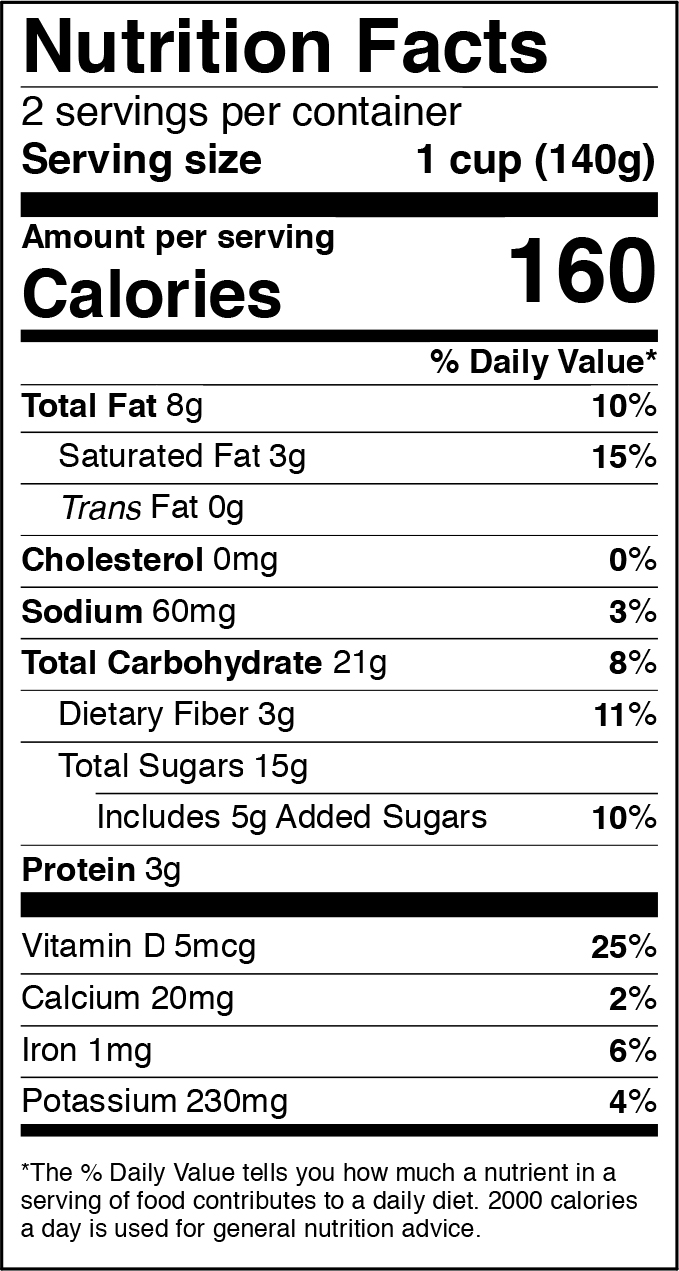
What Is the Difference Between DRI & Daily Value ... This number, called the daily value or DV, is based on the amount of each nutrient needed for a 2,000-calorie-a-day diet. You won't find the daily value on the nutrition facts label. Instead, it's... What does percent Daily Value (DV) on food labels mean ... A food item with a 5 percent DV means 5 percent of the amount of fat that a person consuming 2,000 calories per day would eat. Remember, percent DVs are for the entire day -- not just for one meal or snack. You may need more or less than 2,000 calories per day. For some nutrients you may need more or less than 100 percent DV. SecondsCount.org
How to Calculate Percentage DV for a Nutrient | Healthy ... Divide the given amount of the nutrient by the appropriate recommended daily value found on the FDA guide. So if your item contains 300 milligrams of calcium per serving, divide 300 by 1,000, which...

Dv on food labels
How to Calculate % of Daily Value on Food Labels | livestrong Step 1 Find the nutrient amount on the food label. Step 2 Look up the total daily recommended amount in the USDA Dietary Guidelines. Step 3 Divide the nutrient amount by the total daily recommended value. Step 4 Multiply by 100. Things You'll Need United States Department of Agriculture (USDA) Dietary Guidelines Food label Calculator Tip How To Read Food and Beverage Labels | National Institute ... Or you can call the U.S. Department of Agriculture's Food and Nutrition Information Center at 301-504-5414. Understanding percent Daily Value (% DV) The percent Daily Value (% DV) tells how much a nutrient in a serving of the food or beverage contributes to a total daily 2,000-calorie diet. Food Labels: Fat & Cholesterol | Home & Garden Information ... When comparing food labels, combine the grams (g) of saturated fat and trans fat, then choose the food with the lower combined amount. Look for the lowest % Daily Value for cholesterol, also. Ingredients List: When a food is made with more than one ingredient, an ingredients list is required on the label.
Dv on food labels. Home | Dietary Supplement Label Database (DSLD) | NIH ... Products in the DSLD are Classified by 10 Product Types Use the chart to learn how many products of each type are in the DSLD. To search by a specific type, click on the product type below. 0 10,000 20,000 30,000 40,000 50,000 Number of Labels Other Combinations Botanical Non-Nutrient/Non-Botanical Vitamin Botanicals with Nutrients The Lows and Highs of Percent Daily Value on the Label 5% DV or less of a nutrient per serving is considered low. 20% DV or more of a nutrient per serving is considered high. More often, choose foods that are: Higher in dietary fiber, vitamin D,... FDA Food Label Nutrients Without a DV This is because it hasn't established any specific guidelines about how much a person can consume for optimal health. Food manufacturers are required to give a percentage of the daily value for protein if a product is labeled as being high in protein, or if it's specifically made for children or infants under the age of four. Avoid These... The Basics of the Nutrition Facts Label Percent DV are for the entire day, not just one meal or snack. Daily Values are average levels of nutrients based on a person who eats 2,000 calories a day. A food item with a 5% DV of fat provides 5% of the total fat that a person who needs 2,000 calories a day should eat. You may need more or less than 2,000 calories per day.
What is the difference between the RDA and the DV for ... The DVs (Daily Values) are set by the FDA. On food and supplement labels, you will find the "%DV" listed for vitamins and minerals which are required by law to be listed. Food Labeling Requirements - LabelCalc Plugging in our numbers would result in approximately a 13% daily value percentage of Vitamin D expressed in mcg for correct food label formatting: % DV = (2.5 mcg ÷ 20 mcg) × 100 = 13%. Vitamin E. As I'm sure you can guess, Vitamin E and it's various forms were also previously expressed in international units on a food label. The Complete Guide to Recommended Daily ... - My Food Data The Daily Value (DV) builds on the RDI, but creates a number meant for everyone that can be put on the labels of food products. In short, the RDI is more specific and the DV is more general. If you are confused, don't worry, this article will clarify it for you, and give you a table with all the numbers. Table of Contents Introduction Understanding Food Labels | The Nutrition Source | Harvard ... 5% DV or less of a nutrient per serving is considered low. If you are trying to follow a heart-healthy diet, you might aim for this percentage amount for items like saturated fat, cholesterol, sodium, and added sugars. 20% DV or more of a nutrient per serving is high. Use this amount for nutrients you want more of.
How you can Calculate % of Daily Value on Food Labels ... How to Calculate % of Daily Value on Food Labels. Step 1. Find the nutrient amount on the food label. Step 2. Look up the total daily recommended amount in the USDA Dietary Guidelines. Step 3. Divide the nutrient amount by the total daily recommended value. Step 4. Multiply by 100.The % Daily Value (%DV) is the percentage of the Daily Value for ... How To Read Food Labels: Understanding the Basics - Instacart Food labels list Percent Daily Values (%DV) data to provide a helpful reference point. The %DV tells you what percentage of your daily recommended intake of a particular nutrient is contained within one serving of the product. Use this information to judge whether this product is providing you with appropriate amounts of certain nutrients. Food Labels Flashcards | Quizlet Percent Daily Value (%DV) 1. the percentage of how much of a particular nutrient or fiber a person should consume based on a 2000-calorie diet 2. manufacturers are required to list the %DV of only four vitamins and minerals—namely, vitamin A, vitamin C, calcium, and iron—unless the food is enriched or fortified with others FDA Rounding Rules for Your Food Label - LabelCalc As a food manufacturer, you know your food labels must comply with FDA guidelines for nutrition information. And while these guidelines are important in providing transparency about your products so consumers can make educated decisions, the rules can be overwhelming and complicated to navigate.
FDA Unveils New Easy-To-Read Nutritional Fact Labels for Food Products
Daily Value on the New Nutrition and Supplement Facts ... 5% DV or less of a nutrient per serving is considered low. 20% DV or more of a nutrient per serving is considered high. More often, choose foods that are: Higher in dietary fiber, vitamin D,...

Decoding the Nutrition Facts Label | Scrubbing In
PDF Food Labeling Guide - FDA Food Labeling Guide Additionalcopies are available from: Office of Nutrition, Labeling, and Dietary Supplements HFS-800 Center for Food Safety and Applied Nutrition Food and Drug Administration...

Knit Jones: Bathroom Reno Day #1...in pictures
What Does "% Daily Value" Mean on a Food or Supplement Label? The 100% Daily Value is more than what most people consume. The 100% Daily Value amount is a goal, an encouragement to increase the intake of each of these nutrients. Nutrients to limit: These are total fat, saturated fat, trans fat, cholesterol, and sodium. For these nutrients, the 100% DV is an approximate upper limit of safe consumption.

Food Label Lies
Daily Value and Percent Daily Value: Changes on the New ... Facts Labels Daily Value vs. % Daily Value First, let's look at how Daily Value (DV) and Percent Daily Value (%DV) work together. ... Use %DV to determine if a serving of the food is high or low ...
ESHA Incorporates New FDA Nutrition Facts Labels Into Genesis R&D Food Formulation & Labeling ...
Daily Values (DVs) - National Institutes of Health Recommended intakes of nutrients vary by age and sex and are known as Recommended Dietary Allowances (RDAs) and Adequate Intakes (AIs). However, one value for each nutrient, known as the Daily Value (DV), is selected for the labels of dietary supplements and foods. A DV is often, but not always, similar to one's RDA or AI for that nutrient.

Knit Jones: Zimmerman Sweater, Houston We Have A Problem
Your Guide to the New Food Label | National Kidney Foundation Here is a list of ingredients to avoid when reading labels: chocolate and cocoa cheese, milk, and cream melon, oranges, coconuts, and bananas molasses and peanut butter nuts, dried fruit, and raisins potassium chloride (KCl) dark rye flour frozen vegetables packed with sauce spinach, potato, and tomatoes wheat or oat bran Serving sizes

Knit Jones: Bathroom Reno Day #1...in pictures
Understanding Food Nutrition Labels | American Heart ... Remember that the information shown in the label is based on a diet of 2,000 calories a day. You may need less or more than 2,000 calories depending upon your age, gender, activity level, and whether you're trying to lose, gain or maintain your weight. When the Nutrition Facts label says a food contains "0 g" of trans fat, but includes ...

Knit Jones: S's Seamless Hybrid Sweater
Food Labels | CDC All the numbers on this label are for a 2/3-cup serving. This package has 8 servings. If you eat the whole thing, you are eating 8 times the amount of calories, carbs, fat, etc., shown on the label. Total Carbohydrate shows you types of carbs in the food, including sugar and fiber. Choose foods with more fiber, vitamins, and minerals.
Post a Comment for "38 dv on food labels"